
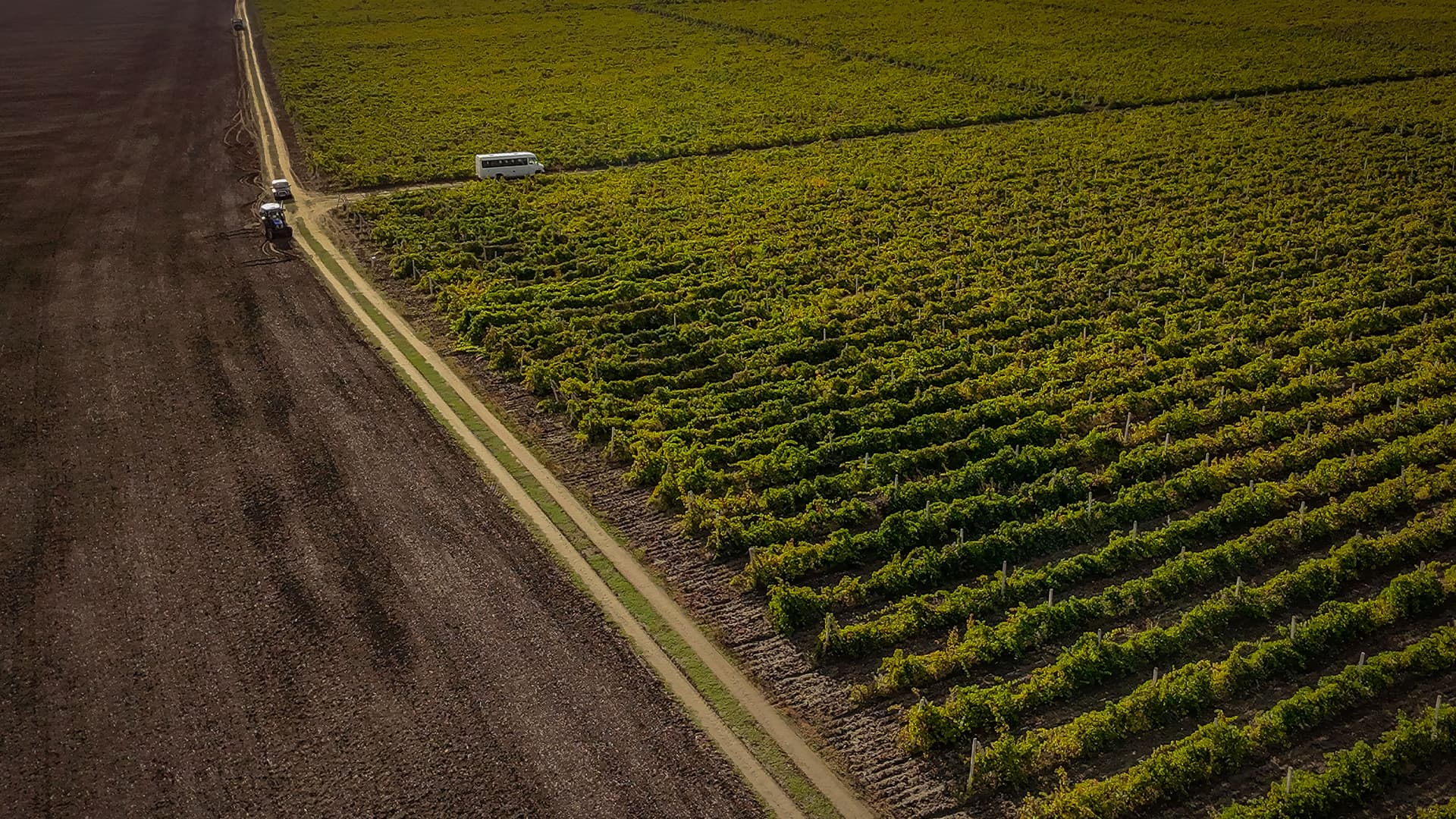
360 hectares across 3 vineyards
Dulgher Family Estate encompasses approximately 360 hectares of vineyards located in Romanovca and Filipeni, in the Leova District, around 70 kilometres from the winery. Rather than forming a single continuous vineyard, the estate consists of three distinct vineyards, together representing one of the most ambitious private viticultural projects in the Republic of Moldova, bringing together diverse soils, elevations and exposures within the Valul lui Traian PGI to create wines that faithfully express their origin.
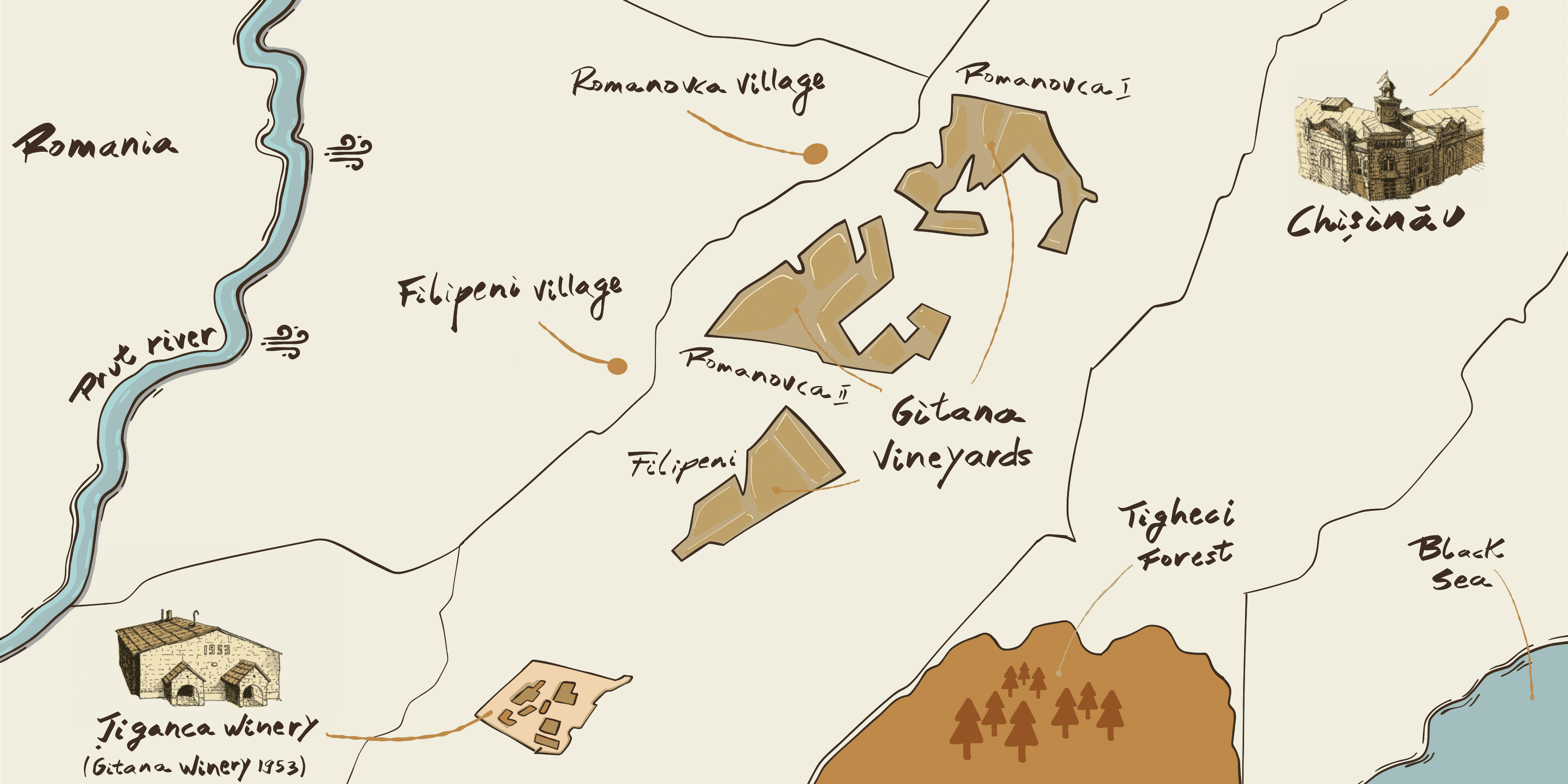
A Parcel-by-Parcel Philosophy
Before planting began, every parcel was studied to understand its soils, geological structure, topography, exposure, water resources and erosion risks. The work was carried out together with specialists from the National Institute of Vine and Wine and Italian consultants in viticulture, agronomy and oenology. The objective was to identify the most suitable location for each grape variety. Rather than adapting the land to the vines, the vines were matched to the land.
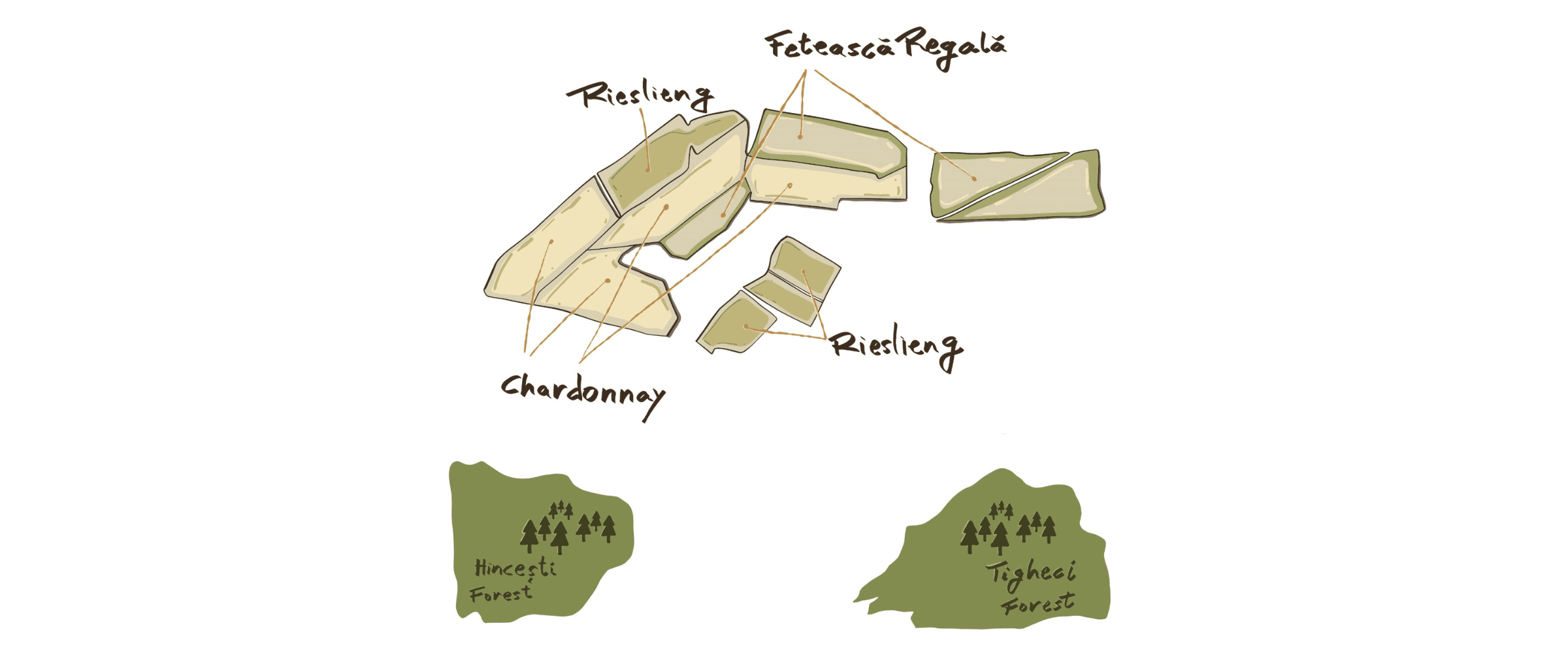
Romanovca 1
Romanovca 1 covers 108.6 hectares and is dedicated to Chardonnay, Fetească Regală and Rhine Riesling. Chardonnay was planted on parcels with balanced water availability, where it develops texture and structure. Riesling occupies the most calcareous sites, preserving acidity and expressing minerality. Fetească Regală was planted on parcels where it retains freshness together with its floral and fruit profile.
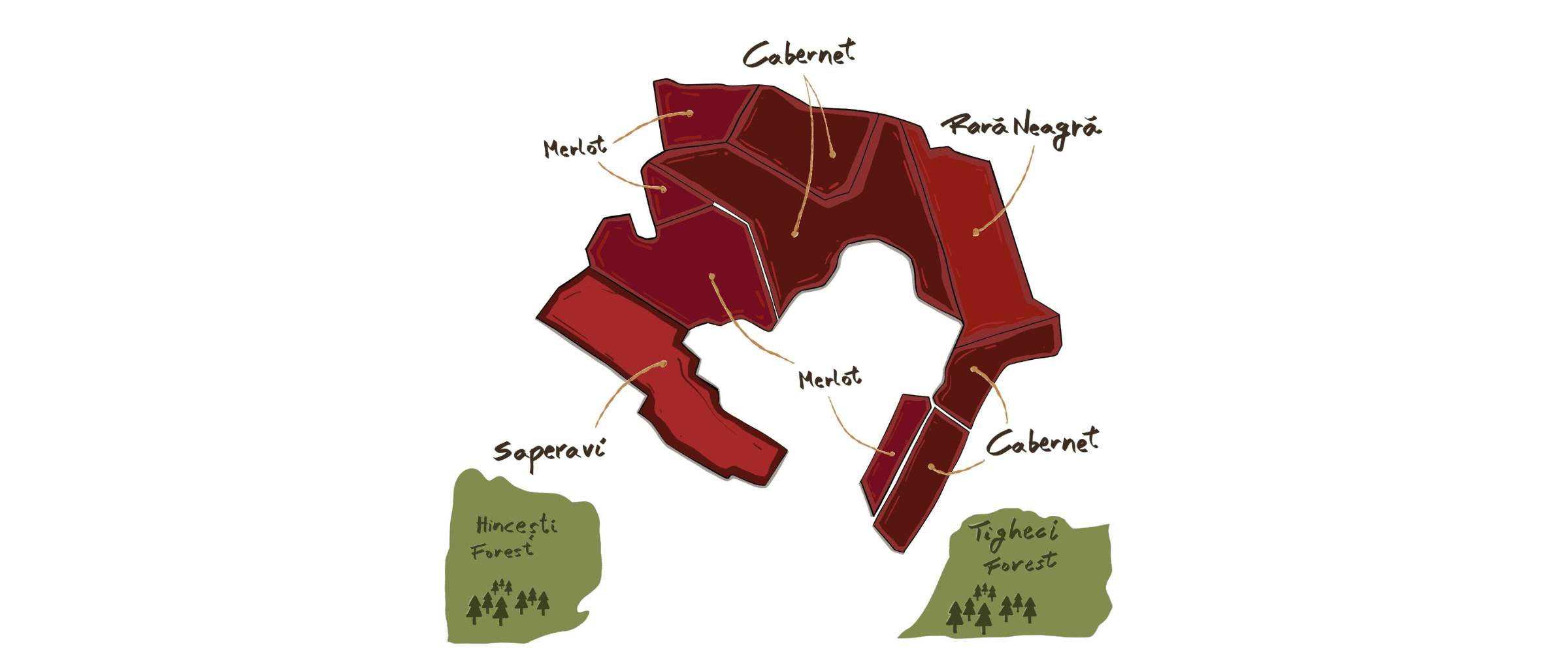
Romanovca 2
Romanovca 2 extends across approximately 134 hectares and is planted with Cabernet Sauvignon, Merlot, Rară Neagră and Saperavi. The vineyard is characterised by predominantly south-west-facing slopes, providing long sun exposure throughout the growing season. These conditions allow the grapes to reach full phenolic ripeness while maintaining freshness.
Filipeni
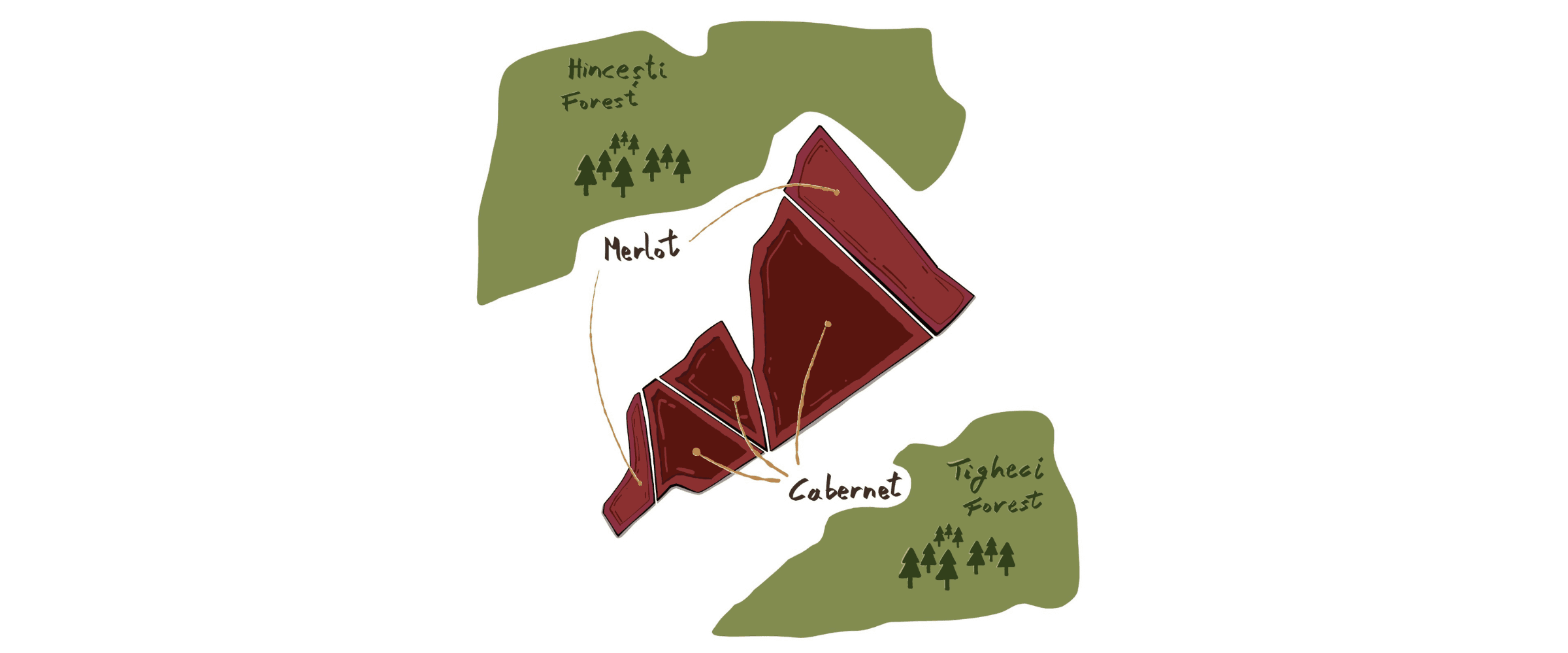
The Filipeni vineyard covers 98 hectares and is planted with Cabernet Sauvignon and Merlot. Its calcareous chernozem soils contain a higher proportion of clay and provide greater water reserves than the Romanovca vineyards. Combined with slightly higher elevations, these conditions support the gradual ripening of the grapes and the long growing season that characterises the estate.
Soil Composition: The Basis of Typology
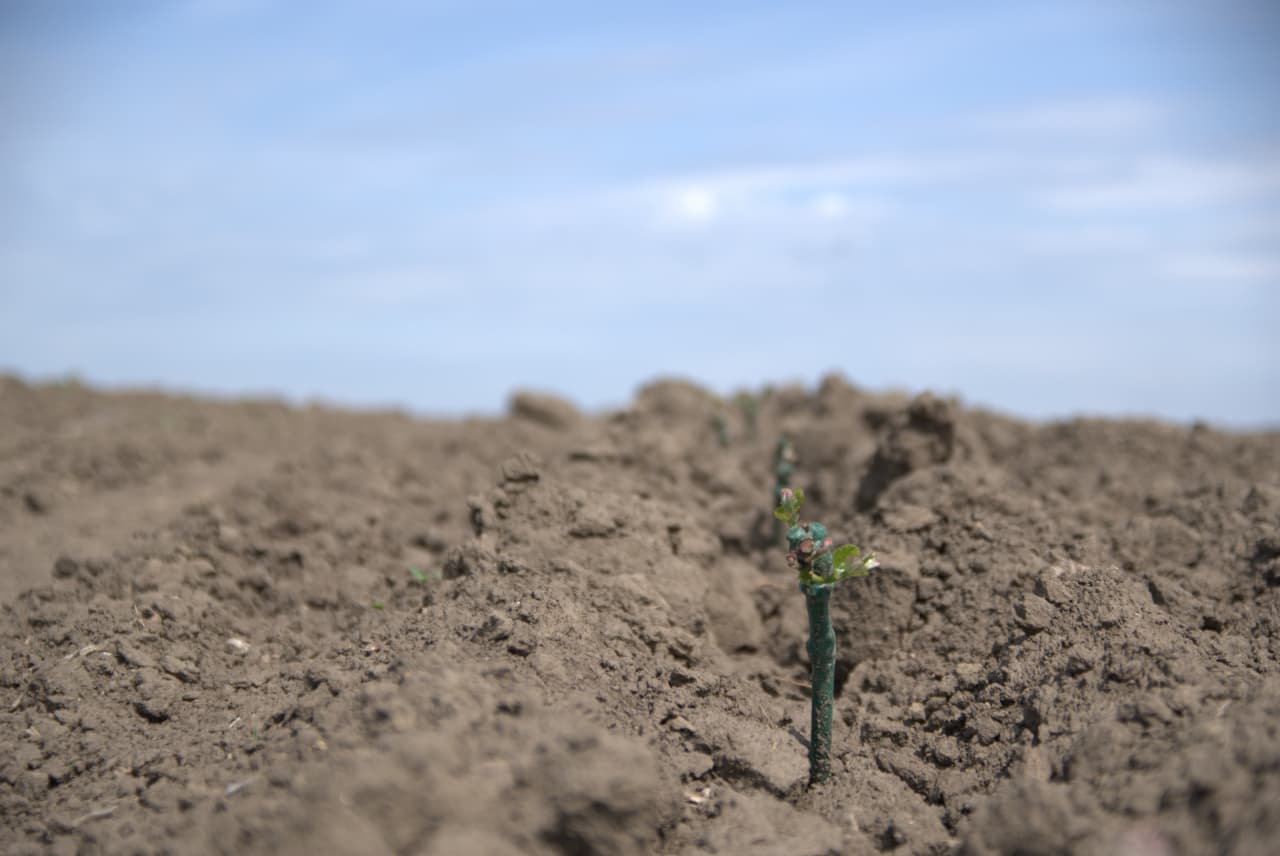
All three vineyards are rooted in predominantly calcareous chernozem soils, one of the world's most fertile soil types and part of the renowned Chernozem Belt stretching across Eastern Europe and Eurasia. Their clay-loam and loamy textures, varying degrees of erosion, calcareous conditions and sloping terrain create favorable conditions for viticulture, while local deluvial and alluvial deposits occur in lower-lying areas.
At Romanovca and Filipeni, the soils have 1.5–4.0% humus, a pH of 7.1–7.8, and 3–14% active calcium carbonate, depending on the parcel. They retain water and nutrients well while maintaining the mineral balance needed to prevent excessive vine vigor.
The presence of calcium carbonate gives these vineyards characteristics comparable to renowned calcareous terroirs such as Champagne and Chablis, Côte de Beaune, Sancerre and Pouilly-Fumé.
At Romanovca and Filipeni, the soils have 1.5–4.0% humus, a pH of 7.1–7.8, and 3–14% active calcium carbonate, depending on the parcel. They retain water and nutrients well while maintaining the mineral balance needed to prevent excessive vine vigor.
The presence of calcium carbonate gives these vineyards characteristics comparable to renowned calcareous terroirs such as Champagne and Chablis, Côte de Beaune, Sancerre and Pouilly-Fumé.
Relief, Slopes and Solar Exposure
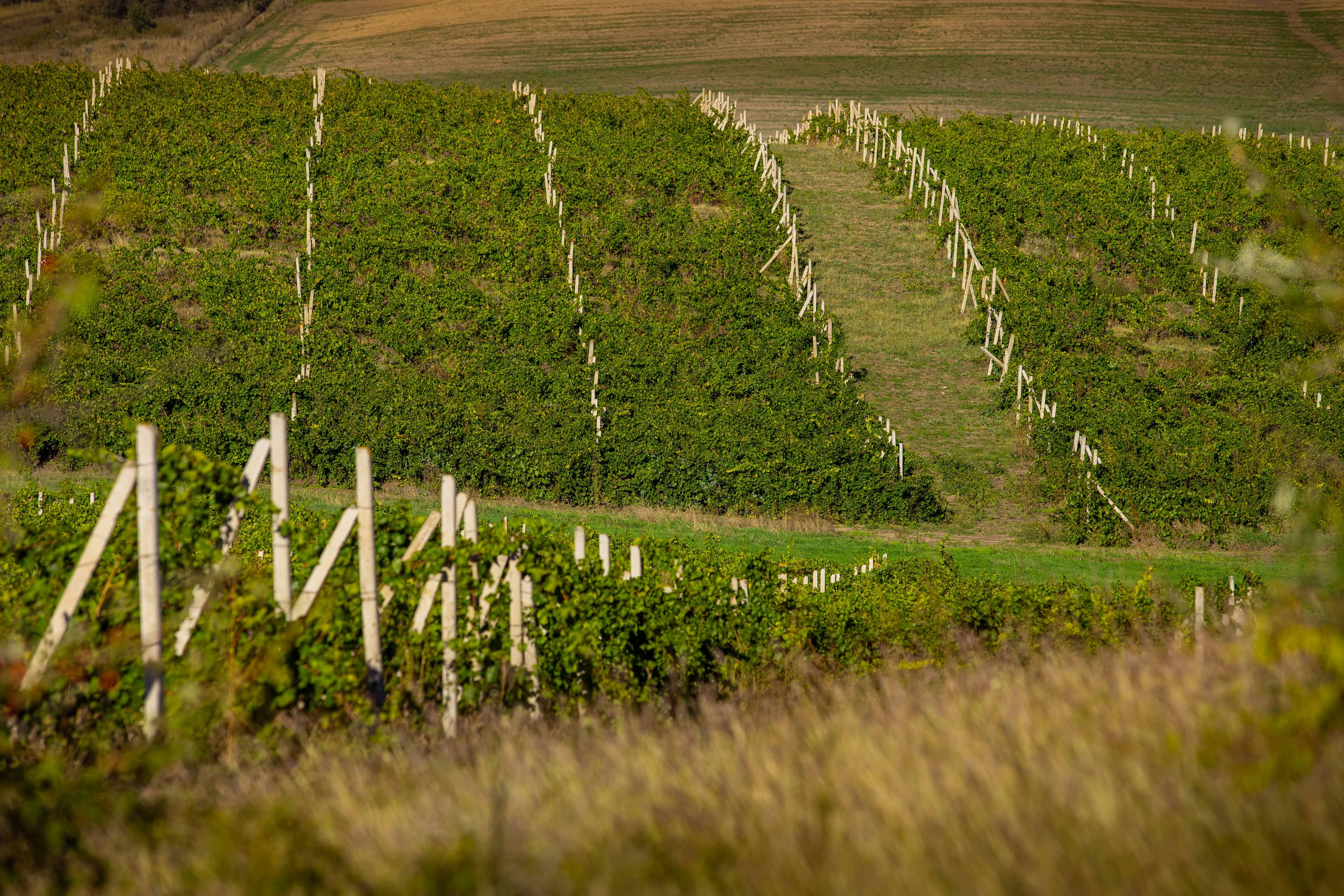
The vineyards lie on gently to moderately sloping terrain, with gradients of 3–12°, most commonly 5–8°, while steeper areas reach 8–12°. Average altitudes are 125 m at Romanovca 1, 130 m at Romanovca 2 and 150 m at Filipeni.
The vineyards benefit from two main exposures: south-west, which favors heat accumulation and phenolic ripening, particularly for red varieties, and north-east, which helps preserve freshness and acidity, especially in Riesling and Fetească Regală.
The vineyards benefit from two main exposures: south-west, which favors heat accumulation and phenolic ripening, particularly for red varieties, and north-east, which helps preserve freshness and acidity, especially in Riesling and Fetească Regală.
Climate, Water Resources, and Harvest Windows
The Valul lui Traian region has a moderately continental climate, with long, sunny and relatively dry summers. Average annual temperatures are around 10.5°C, with 21–22°C in July, annual rainfall of 450–550 mm, a frost-free period of 177–195 days, and an active temperature sum of 3400–3600°C. The hydrothermal coefficient of 0.8–1.0 reflects a slightly arid climate, favorable for aroma concentration and balanced vine growth.
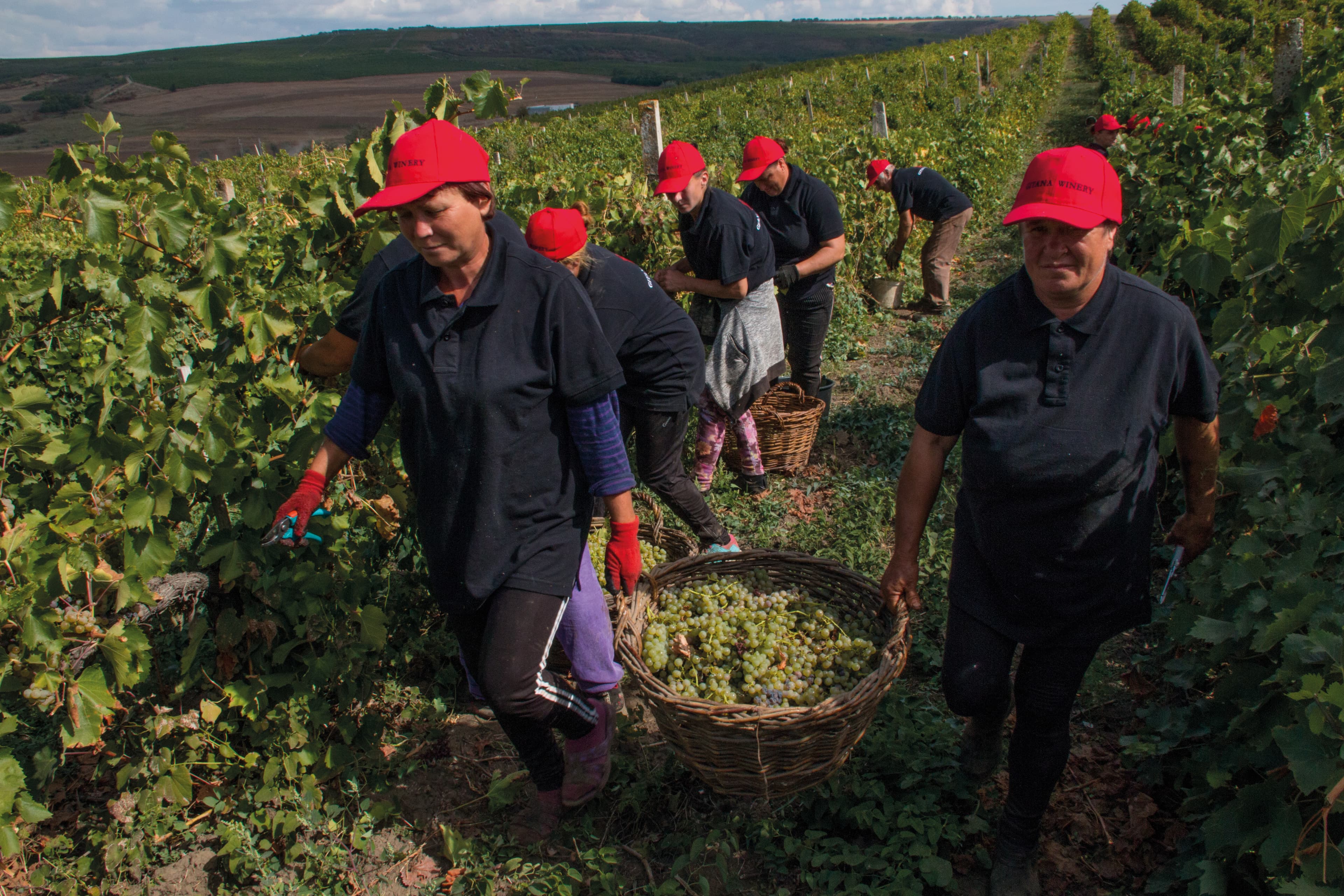
One of the distinctive features of the Dulgher Family Estate vineyards is their long harvest window. Harvest begins in August with Chardonnay, continues through September and October with Fetească Regală, Merlot, Rară Neagră and Saperavi, and can extend into late November or early December for Cabernet Sauvignon and some Riesling used for Mânăstirea wine.
The dry climate, natural air circulation and significant day–night temperature variations allow grapes to remain on the vine well beyond technological maturity, giving the team greater freedom to harvest at full phenolic ripeness. This contributes to greater aromatic complexity, finer tannins and wines with strong aging potential.
One of the distinctive features of the Dulgher Family Estate vineyards is their long harvest window. Harvest begins in August with Chardonnay, continues through September and October with Fetească Regală, Merlot, Rară Neagră and Saperavi, and can extend into late November or early December for Cabernet Sauvignon and some Riesling used for Mânăstirea wine.
The dry climate, natural air circulation and significant day–night temperature variations allow grapes to remain on the vine well beyond technological maturity, giving the team greater freedom to harvest at full phenolic ripeness. This contributes to greater aromatic complexity, finer tannins and wines with strong aging potential.